Materials & Construction · 9 MIN READ
Colour Matching for Synthetic Hair: Swatches, Lighting and Approval
Control the reference, viewing conditions and tolerance discussion before naming a shade approved.
Why this decision matters
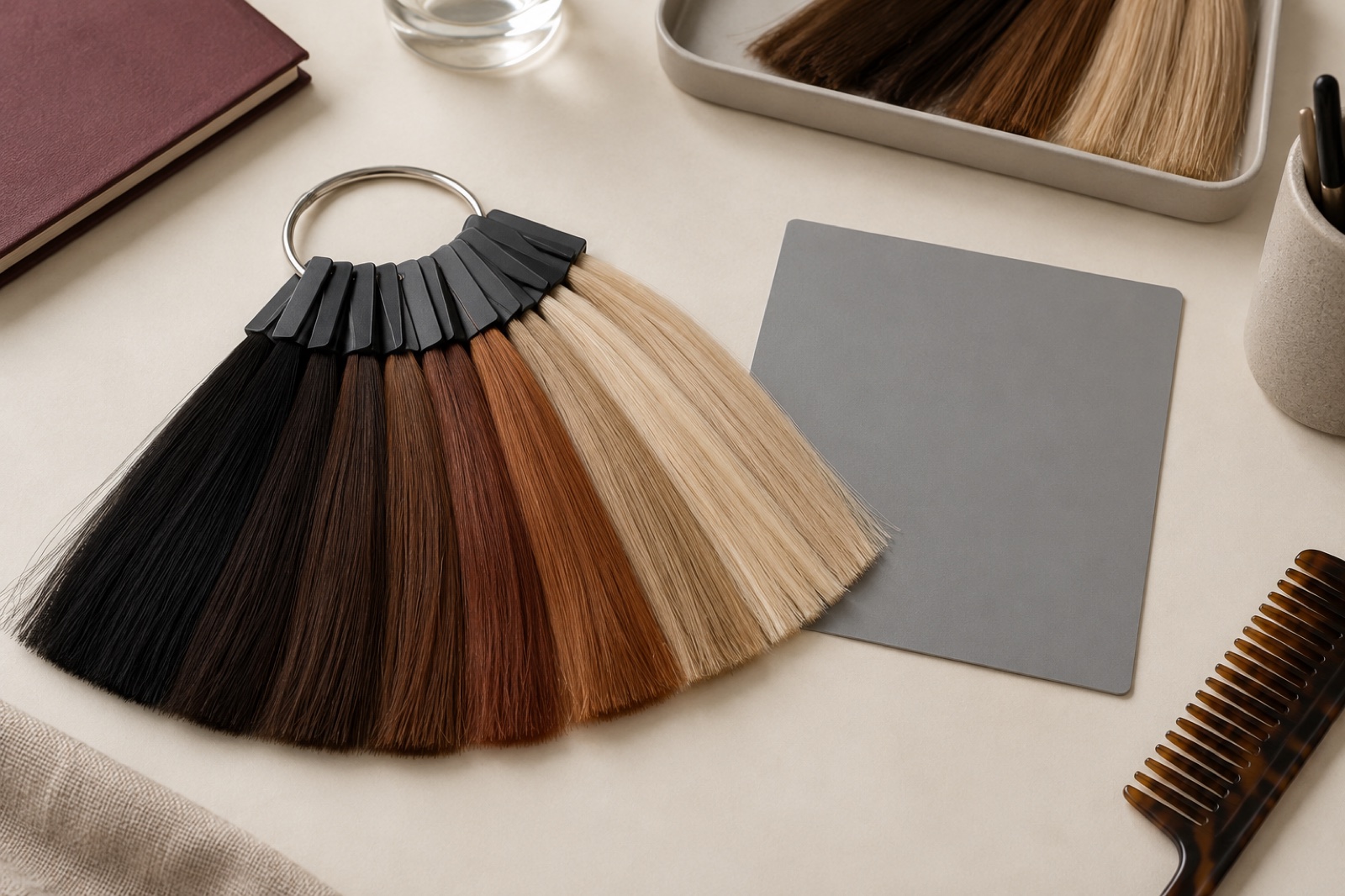
Synthetic colour can look different when fibre lustre, diameter, texture and lighting change. A code or screen image is not a complete colour standard, especially for rooted, blended, highlighted or ombré effects.
For a B2B programme, colour matching for synthetic hair must become part of a controlled product record. The useful record names the decision, shows the reference used, states what remains open and links the decision to the sample and quotation version. This keeps product, sourcing and sales teams from using the same words for different products.
Build the buyer brief
Provide a physical target where possible, the intended texture, root and tip direction, blend ratio description, acceptable visual range and target selling environment. Record whether the shade must coordinate with an existing range or packaging claim.
The supplier response should separate what is available on an existing platform from what needs development, material confirmation or a new sample. Commercial conditions such as minimum quantity, timing, price and sample cost remain quotation-specific; they should not be inferred from a guide or catalogue image.
What the sample must prove
Compare the sample with the approved swatch under at least two agreed lighting conditions and on the finished texture. Check root placement, blend distribution, transition length, repeated bundles or units, and any visible batch variation.
Review feedback is strongest when it states the observed result, the requested change and the method that will be used to approve the next version. Measurements, unedited close views and a short decision table are more actionable than adjectives alone. One consolidated response also prevents conflicting instructions from different buyer-side reviewers.
Approval and change control
Seal and label the approved swatch and sample with version and date. Digital photographs can document placement, but the physical reference remains important because cameras and displays alter colour.
Before production release, reconcile the physical reference with the latest written specification, SKU matrix and packaging files. Identify any deliberate deviation and confirm who accepted it. This creates a practical basis for incoming review, pre-shipment inspection and later repeat-order comparison without pretending that normal material variation can be eliminated.
Common comparison errors
A common error is approving straight loose fibre and assuming the same visual result after curling. Another is using marketing names such as chocolate or ash without a controlled reference.
A useful corrective action is to return to the agreed product record, identify the missing decision and obtain evidence from the exact sample or material being considered. If a supplier proposes an alternative, record the difference and commercial effect instead of quietly changing the baseline specification.
A practical working example
For a highlighted ponytail, the buyer can approve base shade, highlight shade, percentage impression and placement on a curled sample. Reorders are compared to the retained swatch and finished unit rather than only the colour name.
Use the checklist below as an RFQ and sample-review aid, then adapt it to the selected product and market. Where regulation, labelling or a formal test method matters, the buyer and supplier should confirm the applicable destination requirement and competent testing route instead of treating this editorial guide as legal or laboratory advice.
Buyer checklist
- Physical colour reference
- Texture used for approval
- Root and blend placement
- Lighting conditions
- Acceptable visual range
- Retained reorder swatch
Decision record
Buyer provides
Provide a physical target where possible, the intended texture, root and tip direction, blend ratio description, acceptable visual range and target selling environment. Record whether the shade must coordinate with an existing range or packaging claim.
Supplier discusses
Synthetic colour can look different when fibre lustre, diameter, texture and lighting change. A code or screen image is not a complete colour standard, especially for rooted, blended, highlighted or ombré effects.
Approval evidence
Seal and label the approved swatch and sample with version and date. Digital photographs can document placement, but the physical reference remains important because cameras and displays alter colour.
Still to confirm
Current availability, commercial terms, tolerances, project timing and any destination-specific requirement.
Primary references
Final specifications, test methods, commercial terms and destination requirements should be confirmed for the actual product and order.